Thursday, June 27, 2013

Meditation and Emptiness

Sunflower

It's hard to figure out what you're emptying before you start meditation. Page 437 of DeBary and Bloom's Sources of Chinese Tradition Volume One illustrates emptiness within a Western context is something pessimistic and existential. *Buddhism instead follows that if all phenomenological events, or events based on sensual perception, are unreal, then the only reality is Emptiness (sunyata).

"The ultimate Emptiness was here and now, everywhere and all- embracing, and there was, in fact, no difference between the great Emptiness and and the phenomenal world (samsara).  Thus all beings were already participants of the Emptiness that was nirvana; they  were already Buddha if only the would realize it."  (DeBary and Bloom 437)

The sunflower also illustrates sunyata.  My apologizes for forgetting the source, but the logic goes like this:  What is a sunflower?  Is it the water that quenches it's thirst?  Is the the sun that gives it warmth?  Is it the nutrients?  These are all necessary, but insufficient conditions that define the sunflower.  The sunflower is all and none of these things at the same time.   Our personal sensory and mental frame that defines the existence of the sunflower in this particular way.  Emptiness is not the lacking of something or negative space, it's a state of non-being, lacking identity and context.

When I meditate, I imagine myself as a raindrop in a vast ocean.  My monkey mind loves to imagine itself rising to great heights and crashing to the earth.  But once I sink deep into the ocean, I encounter the great void of the great dark ocean.  It's that feeling of staring across the dark ocean at night.  A sudden visceral truth about nature puts me into shock, but I can't rationalize or explain this experience.

For the curious beginner, Australian Buddhist monk Ajahn Brahm gives a simple and light-hearted take on breathing meditation:

http://www.youtube.com/watch?v=nCUQdIbfWwQ

Give it a try!  No purchase necessary!

Citation:

De, Bary William Theodore, Irene Bloom, Wing-tsit Chan, Joseph Adler, and Richard John Lufrano. Sources of Chinese Tradition. Vol. 1. New York: Columbia UP, 1999. Print.

*If you want to be nit-picky this is from The Three-Treatise School.

Tuesday, June 25, 2013

Money is the Catalyst to Culture

Citing Ayn Rand irks many people, but she did make a strong point about the role of money. In Atlas Shrugged,  Rand claims money isn't evil.  Money is a stack of semi-precious metal and paper.  She defines it as the representation of one's work, and people define through consent the numerical value behind money.

Some argue that because money is the instrument that can acquire weapons and illegal narcotics, it must be the root of evil.  But money also commissions art and creates incentive to research medicine.  The way we use money defines our culture.

Let's consider the modern yuppie.  Said person pursues a position in banking to accumulate wealth so that the person may enjoy front row tickets to see Beyonce or eat expensive steak.  We claim that this person is living excessively with little to no regard to the rest of society.

Backtrack to 11th century Northern Song China.  A businessman trades his goods at a profit so that he may cultivate his fields for the best tasting tea.  The emperor offers the grand prize of exclusive rights to sell him tea.  Everyone competes and refines their methods until someone wins.  Again, tea has little to no utilitarian value to society.  Is it wrong to enjoy a cup tea?

Is it because of the recentness of modern culture that we can say it lacks "cultural" value?  Imagine if something we now consider lowbrow, like Justin Beiber's lyrics, became classical canon for future English textbooks centuries from now?

Regardless of what your taste is for tea or Justin Beiber, we can't deny that both were the products of the movement of money.  All elements of culture require human energy to produce.  If the definitions of human morals are also the product of human energy, couldn't I make the touchy claim that morals are also made of money?

Friday, May 31, 2013

I'm Going to Slow Down on Blogging for a While

Yes, I know, it's sad, but I have to start studying for a very important language test for an awesome chance to work at a very prestigious organization.  I won't name names yet, but it's for a place I'm willing to sacrifice almost anything to get.

But this will also be an excellent opportunity to update everyone on my learning progress, so I'm going to update you on my studying progress about once a week or less.  This week, I'm going to look up the most common words used in academia and start translating!

Monday, May 27, 2013

Anthony Bourdain is My Inner Narrator

X

(Source)

A good chef told me three conditions must be satisfied before a customer enjoyed their food:

1)  Is this customer hungry?

If the customer just ran a marathon, anything tastes good.  I remembered  my half marathon the oranges at mile 10 were ambrosia.

2)  Is the customer with friends?

Customers are less likely to complain about their food if they have good company.  Unless you manage to piss off the whole table.

3)  Is there money in this guy's pocket?

If one is too worried about personal finances, nothing tastes good.

Then, you can blame the restaurant.

Food writing isn't so much about the edible material on the plate, but the narrative behind the edible.  One would never imagine a sun-damaged former drug addict chef from New York City would be one of the most powerful food critics on earth.  Many people would drop everything to have a beer or meal with him.

Why?  He has an interesting narrative.

Take for instance his trip to Finland in a reindeer restaurant:

"Like reindeers?  I do!  I like 'em on my plate, while Santa looks in mute horror as he's duct taped and ball-gagged!"

He's very honest and direct with his thoughts.  He's also self-deprecating or insulting his own culture (America) when commenting, but he's always careful not to offend the culture he's visiting.

One of his best episodes was his trip to Saudi Arabia.  Before dinner when his hosts are praying to Mecca, he reminds his Western audience to appreciate the present beauty this foreign culture.

Paradoxically Anthony Bourdain has the easiest and hardest medium to critique.  It's relatable to everyone because unlike movie, print, or art, everyone alive has some visceral experience with food.  At the same time it's the easiest way to offend someone if one expresses disgust with another culture's food.

I don't believe it's necessary to shock or offend to get good blog views.  As my blog keeps developing, I will try my best to tell it like it is with my inner Bourdain.  So long as you're honest, relatable, and clear, you have a story worth telling.

Sunday, May 26, 2013

Why I Don't Believe in Heaven

So the random number generator landed on.... wait for it...

Buddhism!

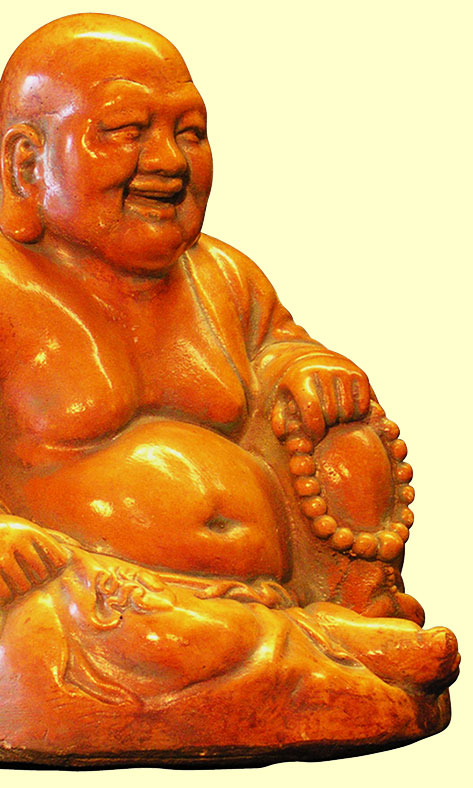
Most people imagine the morbidly obese version. or the one that snorts cocaine on South Park, but I like the more traditional one with the depiction of enlightenment:

buddha

(Although, maybe he was morbidly obese if he still wasn't skin and bones after fasting for 49 days.)

Buddhism was one of the last major religions of China.  It was sort of like the free love movement in the US during the 1960's.  Conservatives thought it would be the end of society, while liberals were fighting "the system."

Theodore and Bloom in "Sources of Chinese Tradition" pointed out that when Buddhism entered China, China was the first foreign civilization that had a writing system, so initial Chinese texts on Buddhism record the transition from skepticism to eventual *acceptance.

When I was sitting on the grass of my campus quad, a Christian came up to me and asked if I believed in Jesus and internal salvation.

Don't get me wrong, Jesus is a pretty chill and awesome guy, but to me heaven doesn't make any sense.  Let's say you spend your life living "to the bible," but your ideal of heaven is murdering people and watching them writhe in pain, didn't that defeat the purpose of living a good life?  This version of heaven is someone else's hell!   I don't think God would spend His time actualizing "300" for one's pleasure.

Or what if a grumpy person who lived out in the woods hated all of humanity, but didn't act on his immorality.  Does he get a fast pass to heaven too?

I don't believe in heaven because salvation comes from understanding and acting good, not acting good for the sake of heaven.  It takes more than good behavior to reach this higher state of being, whether you call it heaven or I call it nirvana.  It takes having full faith and acting  on our goodness an compassion that makes us good people.

Or I could be dead wrong, and the Flying Spaghetti Monster rules all.  All hail His carbohydrate complexity!

Touched_by_His_Noodly_Appendage

(Source)

*The Chinese are still struggling with the Dalai Lama.  It's official, my blog will be banned from mainland China!

Friday, May 24, 2013

Eels

I watched a nature documentary on eels and how they will die like any other living thing that appeals to human appetite.  Pacific Island culture rely on the movement of eels from salt water to fresh water to forecast the coming of winter.  A native Pacific Islander taught some modernized children about the importance of eels within their culture.  He said eels were "the foundation of  civilization" because it revealed truths about nature.

3080866810_94594a429d_z

(These eels most likely hatched in the northeastern United States!)

Civilization begins when humans begin to control patterns in nature, instead of nature controlling humans.  All civilization begins with some postulate about natural truths.

Before Mr. Bacon Lover starts seeping his ideology into every discussion about Chinese culture, Shang Dynasty bone divination provides a glimpse into a crucial postulate about Chinese culture:

Fate has been predestined by nature.


After performing a ritual, the diviner would interpret some message about the future.  Sometimes they're completely wrong, but it provides people comfort "knowing" how to prepare for the future.  Since society collectively accepts the fate of these messages, everyone can see how their lives fit within this natural order.

For the most part, Chinese culture (and I use this term loosely) builds corollaries on this postulate.  But the industrial revolution modernization that comes with it is a huge shock to Chinese culture, because suddenly the will of an individual has the possibility to overcome the preconceived natural order of Chinese society.

Can human ability define fate?

During the 2008 opening ceremony of the Chinese Olympics, of all the characters in the Chinese language to be displayed by their human powered typesetter, they choose "和," or harmony.  The act demonstrates the beauty of being in complete harmony of the order around us, and the individual contributes to harmony.  But as we continue to explore Chinese literature together, the collective can also stagnate growth and be closed minded to improvement.

As I start to read "Sources of Chinese Tradition" and leave the Shang Dynasty, from this point onward I will put the page numbers in a number generator to prevent myself from viewing literature in chronological order.  One of my professors said that reading culture in chronological order implies some sort of progression or development.  Rather, literature and our thoughts are amorphous that waxes and wanes to the conditions of society and nature.

Monday, April 15, 2013

Quick Update

Instead of reading An Anthology of Chinese Literature, I will read, " Sources of Chinese Tradition" by De Bary, Bloom, and Alder The text focuses more on prose and argument than literary aesthetics. Plus I got it for a dollar at the clearance section of an awesome bookstore.

Sources of Chinese Tradition

http://www.amazon.com/Sources-Chinese-Tradition-Vol-1/dp/0231109393

My copy was formerly owned by Bonnie Bae. Whoever you are, I have all your comments!