Showing posts with label Buddha. Show all posts

Sunday, July 7, 2013

The Best Graduate Student in Religious Studies: Xuanzang

Xuanzang took a round trip from China to India by foot during the early 7th century.  Talk about the ultimate backpacking trip!   This map charts his journey:

Xuangzang

(http://www.silk-road.com/artl/hsuantsang.shtml)

When I think about his journey, I can't help but think about graduate school.  He's arguably the best graduate student in world history:

  • He realized that China didn't have comprehensive detail about Buddhism and needed more credible sources.

  • He defied the emperor Tang Taizong's orders went against everyone's advice.  Makes modern visa issues seem like a trifle.

  • He did amazing fieldwork.  He learned dozen foreign languages and befriended many locals.  Plus there's the whole let's make a loop around India thing.

  • Buddhism in India was on the wane, so he went just in time before Buddhist knowledge became irrelevant in India.

  • As John Keay in A History of China puts it, he brought 500 trunks, an ENTIRE LIBRARY's worth of Buddhist text carried by HUNDREDS of monks.  He brought an ENTIRE UNIVERSITY with him!  Sadly, one of his elephants fell in a precipice.

  • Emperor Tang Taizong ordered 'Great Pagoda of the Wild Goose' to house all of Xuanzang's precious text.  It's essentially a university for Xuanzang.  I use the present tense of the verb "is" because IT'S STILL THERE, 1400 years later!  Take that Cambridge!WildGoose


(Shablam!  All in it's jpeg glory!)


It's easy to bash humanities graduate students and say that their work serves little to no practical purpose towards humanity.  Then I think about this pagoda, and how Xuanzang permanently changed the moral values of east Asia.


I'm still considering graduate school in Chinese literature.


I have a new twitter!  Feel free to add me: @TPolmelo.  Feel free to comment on grad school or any other thoughts as well!


Thursday, June 27, 2013

Meditation and Emptiness

Sunflower

It's hard to figure out what you're emptying before you start meditation. Page 437 of DeBary and Bloom's Sources of Chinese Tradition Volume One illustrates emptiness within a Western context is something pessimistic and existential. *Buddhism instead follows that if all phenomenological events, or events based on sensual perception, are unreal, then the only reality is Emptiness (sunyata).

"The ultimate Emptiness was here and now, everywhere and all- embracing, and there was, in fact, no difference between the great Emptiness and and the phenomenal world (samsara).  Thus all beings were already participants of the Emptiness that was nirvana; they  were already Buddha if only the would realize it."  (DeBary and Bloom 437)

The sunflower also illustrates sunyata.  My apologizes for forgetting the source, but the logic goes like this:  What is a sunflower?  Is it the water that quenches it's thirst?  Is the the sun that gives it warmth?  Is it the nutrients?  These are all necessary, but insufficient conditions that define the sunflower.  The sunflower is all and none of these things at the same time.   Our personal sensory and mental frame that defines the existence of the sunflower in this particular way.  Emptiness is not the lacking of something or negative space, it's a state of non-being, lacking identity and context.

When I meditate, I imagine myself as a raindrop in a vast ocean.  My monkey mind loves to imagine itself rising to great heights and crashing to the earth.  But once I sink deep into the ocean, I encounter the great void of the great dark ocean.  It's that feeling of staring across the dark ocean at night.  A sudden visceral truth about nature puts me into shock, but I can't rationalize or explain this experience.

For the curious beginner, Australian Buddhist monk Ajahn Brahm gives a simple and light-hearted take on breathing meditation:

http://www.youtube.com/watch?v=nCUQdIbfWwQ

Give it a try!  No purchase necessary!

Citation:

De, Bary William Theodore, Irene Bloom, Wing-tsit Chan, Joseph Adler, and Richard John Lufrano. Sources of Chinese Tradition. Vol. 1. New York: Columbia UP, 1999. Print.

*If you want to be nit-picky this is from The Three-Treatise School.

Sunday, May 26, 2013

Why I Don't Believe in Heaven

So the random number generator landed on.... wait for it...

Buddhism!

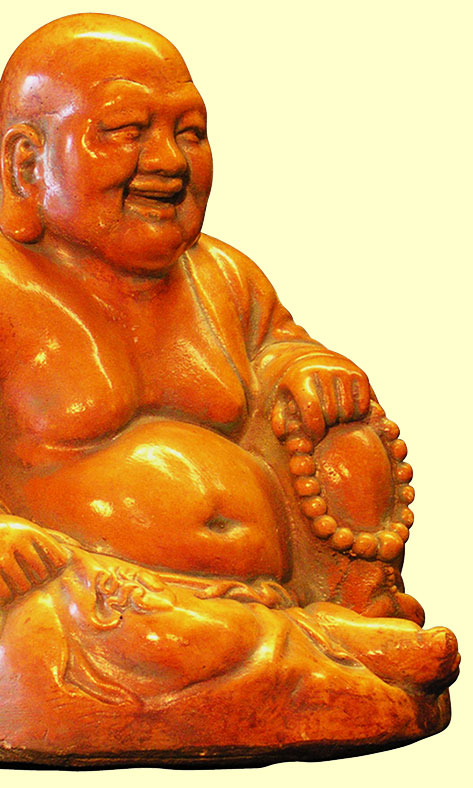
Most people imagine the morbidly obese version. or the one that snorts cocaine on South Park, but I like the more traditional one with the depiction of enlightenment:

buddha

(Although, maybe he was morbidly obese if he still wasn't skin and bones after fasting for 49 days.)

Buddhism was one of the last major religions of China.  It was sort of like the free love movement in the US during the 1960's.  Conservatives thought it would be the end of society, while liberals were fighting "the system."

Theodore and Bloom in "Sources of Chinese Tradition" pointed out that when Buddhism entered China, China was the first foreign civilization that had a writing system, so initial Chinese texts on Buddhism record the transition from skepticism to eventual *acceptance.

When I was sitting on the grass of my campus quad, a Christian came up to me and asked if I believed in Jesus and internal salvation.

Don't get me wrong, Jesus is a pretty chill and awesome guy, but to me heaven doesn't make any sense.  Let's say you spend your life living "to the bible," but your ideal of heaven is murdering people and watching them writhe in pain, didn't that defeat the purpose of living a good life?  This version of heaven is someone else's hell!   I don't think God would spend His time actualizing "300" for one's pleasure.

Or what if a grumpy person who lived out in the woods hated all of humanity, but didn't act on his immorality.  Does he get a fast pass to heaven too?

I don't believe in heaven because salvation comes from understanding and acting good, not acting good for the sake of heaven.  It takes more than good behavior to reach this higher state of being, whether you call it heaven or I call it nirvana.  It takes having full faith and acting  on our goodness an compassion that makes us good people.

Or I could be dead wrong, and the Flying Spaghetti Monster rules all.  All hail His carbohydrate complexity!

Touched_by_His_Noodly_Appendage

(Source)

*The Chinese are still struggling with the Dalai Lama.  It's official, my blog will be banned from mainland China!